
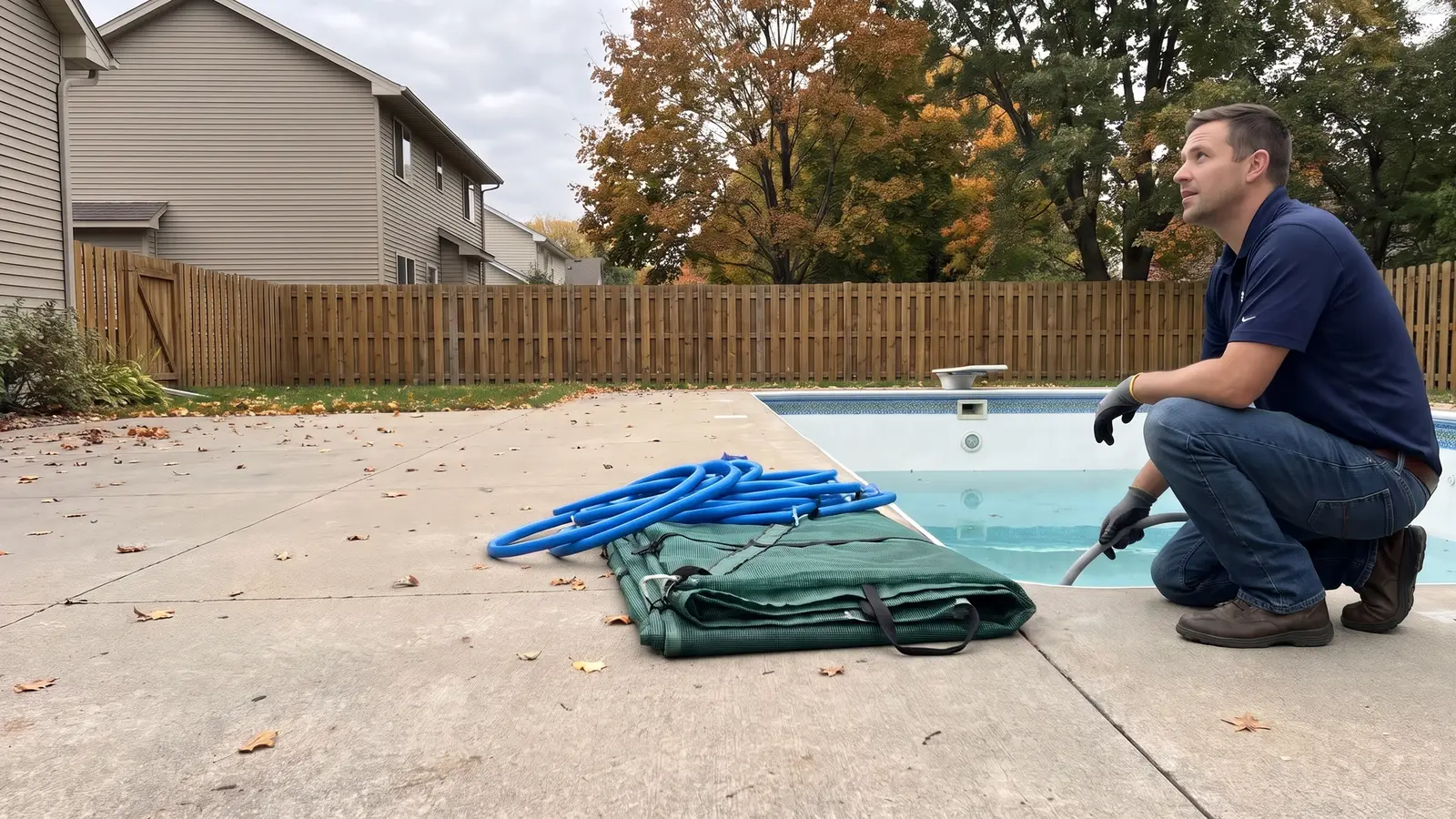
Close your Minnesota pool once the water stays below 65°F, and always before the first run of freezing nights. For most unheated pools, that lands near National Pool Closing Day, the third Saturday in September. Heated pools can stay open a few weeks longer. The job: clean, balance, lower the water, add winterizing chemicals, drain the equipment, blow out the lines, and cover.
Rather skip the shop vac and the plugs? Royal Pool & Spa has been closing Twin Cities pools since 1988. If you'd like to do it yourself, here's how and when.
When should you close your pool in Minnesota?
Watch the water, not just the calendar. Once your pool water stays below 65°F, swim season is basically over and it's time to close. In the Twin Cities, that usually lines up with late September. Your hard deadline is the first stretch of freezing nights, because frozen water in the lines is what does the damage.
Unheated pools: plan around National Pool Closing Day
Most residential pool owners close by the third Saturday in September, known as National Pool Closing Day. It's a good date to put on the calendar in August.
Heated pools: you get a few extra weeks
A heated pool can extend the swimming season by up to three weeks past that date. If late-season swims matter to you, a pool heater makes that possible.
Frost nights: don't wait for the first hard freeze
Water left in your plumbing can freeze, expand and crack pipes. It can also damage your pump and filter. If the forecast shows nights near freezing and your pool is still open, move your closing up.
Falling leaves: close early or cover
If your yard has maple, oak or other leafy trees, fall means skimming every day. Closing a little early, or using an automatic cover, saves you that daily cleanup and keeps your water cleaner going into winter.
How to close a pool for winter, step by step
Closing a pool takes seven steps: store accessories, clean and balance the water, lower the water, add winterizing chemicals, drain the equipment, blow out and plug the lines, and cover the pool. Do them in this order. Step 6 is the one where a small miss turns into a spring repair bill, so take your time there.
1. Remove and store your accessories
Take out ladders, rails, diving boards, skimmer baskets, return fittings, and safety ropes or floats. Rinse them and store them somewhere dry so they won't crack or rust over winter.
2. Deep clean and balance the water
Skim the surface, brush the walls and steps, and vacuum the floor. Then test and balance pH, total alkalinity, calcium hardness and chlorine. Use test strips, or bring a water sample to your pool service company.
3. Lower the water level (if your cover calls for it)
How much you lower depends on your setup. With a skimmer plug, you may not need to drain at all. Without one, lower the water just below the skimmer mouth. Vinyl liner pools need water to hold the liner in place, so never drain more than your setup calls for.
4. Add winterizing chemicals and shock the pool
Add algaecide, stain prevention and other winterizing chemicals, then run the pump a full cycle to spread them evenly. Shock the pool the night before you close to kill lingering bacteria.
5. Drain and store the equipment
Drain the pump, filter, heater and chlorinator, and remove their drain plugs. Clean the filter and store hoses and small parts indoors. Tip: drop the plugs in the pump basket so you can find them next spring.
6. Blow out the lines and plug them
Blow air through every plumbing line until no water is left. Then install expansion plugs in the skimmers, returns and cleaner lines, and add antifreeze where recommended. If you've never done this, call a pro. A line that cracks underground can mean breaking through your deck to fix it.
7. Cover the pool securely
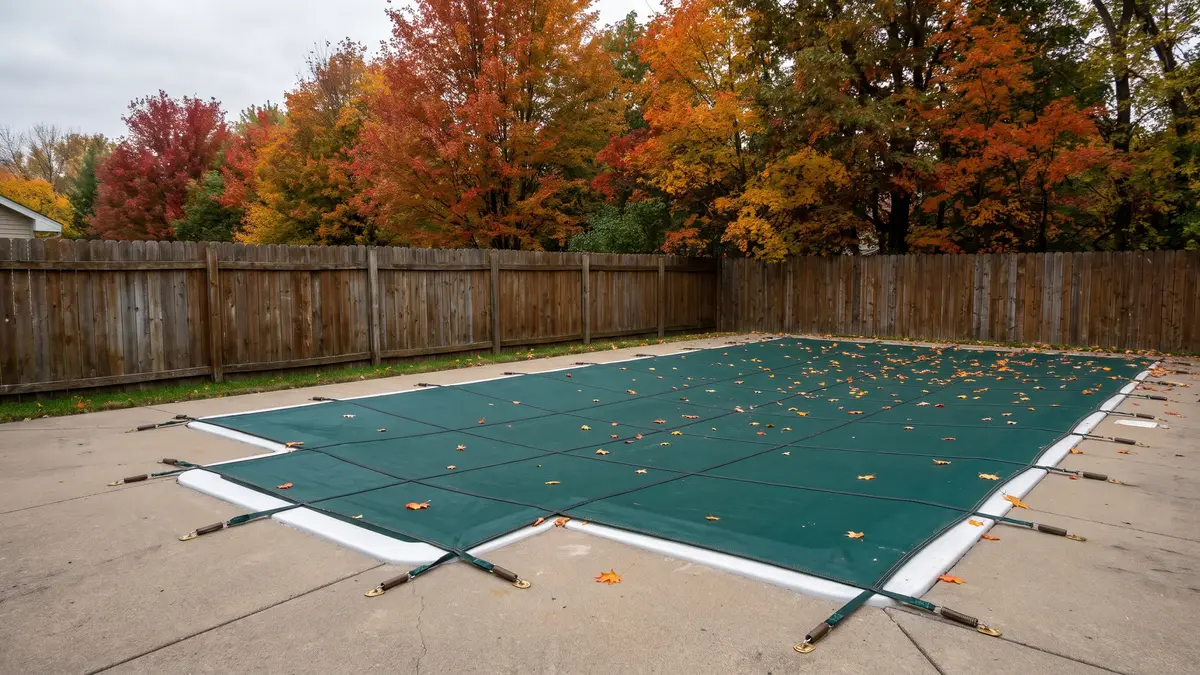
Spread your winter cover evenly, then secure it with clips or water bags. With a solid cover, float a pool pillow in the center and consider a cover pump for rain and melting snow. Not sure which cover fits your pool? See choosing the right winter pool cover and our picks for the best winter pool covers. For the easiest open and close every year, consider an automatic retractable cover.
What happens if you close your pool too early or too late?
Close too early and warm water can still grow algae under the cover, so you open to a green pool in spring. Close too late and the first hard freeze can crack your plumbing, pump and filter. Of the two, late usually costs more, because frozen lines often sit underground where they're hard to reach.
Algae, burst lines, cracked equipment and deck damage are all on the list. We cover each one in why proper pool closing matters.
Closing a saltwater pool or an automatic cover?
Both need a few extra steps on top of the seven above. Saltwater pools need salt cell care before winter. Automatic covers need a quick check that they open and close smoothly before you count on them all winter.
Saltwater pools: Don't add salt in the two weeks before closing, and remove and clean the salt cell with a plastic scraper or hose, never metal. Here's the full saltwater pool winterization checklist.
Automatic covers: Run the cover open and closed before winter. Blocked tracks, tangled ropes or standing water can stop it. If yours sticks, here's why your automatic pool cover won't open or close.
Should you close your pool yourself or hire a pro?
DIY makes sense if you have a blower or shop vac, know every line in your system, and have a free fall weekend. Hire a pro if you don't, or if your pool has a heater, a salt system or an automatic cover. One missed line or forgotten drain plug can turn into a spring repair bill.
What a Royal Pool & Spa closing includes
Our start-up and closing service covers:
- Swimming pool closing, done with proper closing techniques to protect your pool through the off-season
- Pool inspection, to check your pool's condition before it sits for the winter
- Salt cell cleaning for saltwater pools
- Spring opening, so your pool is ready when the weather turns
Royal Pool & Spa is family-owned and has served Twin Cities pool owners since 1988.
Where we close pools
We're based in Hugo and close pools across the Twin Cities, including White Bear Lake, Stillwater, Forest Lake, Lino Lakes, Mahtomedi, Woodbury, Oakdale, Bayport and nearby towns.
Book your pool closing with Royal Pool & Spa
Don't let a Minnesota winter crack your lines. Let our team close your pool the right way, so spring opening is easy.
📞 Call us at 651-779-7606