
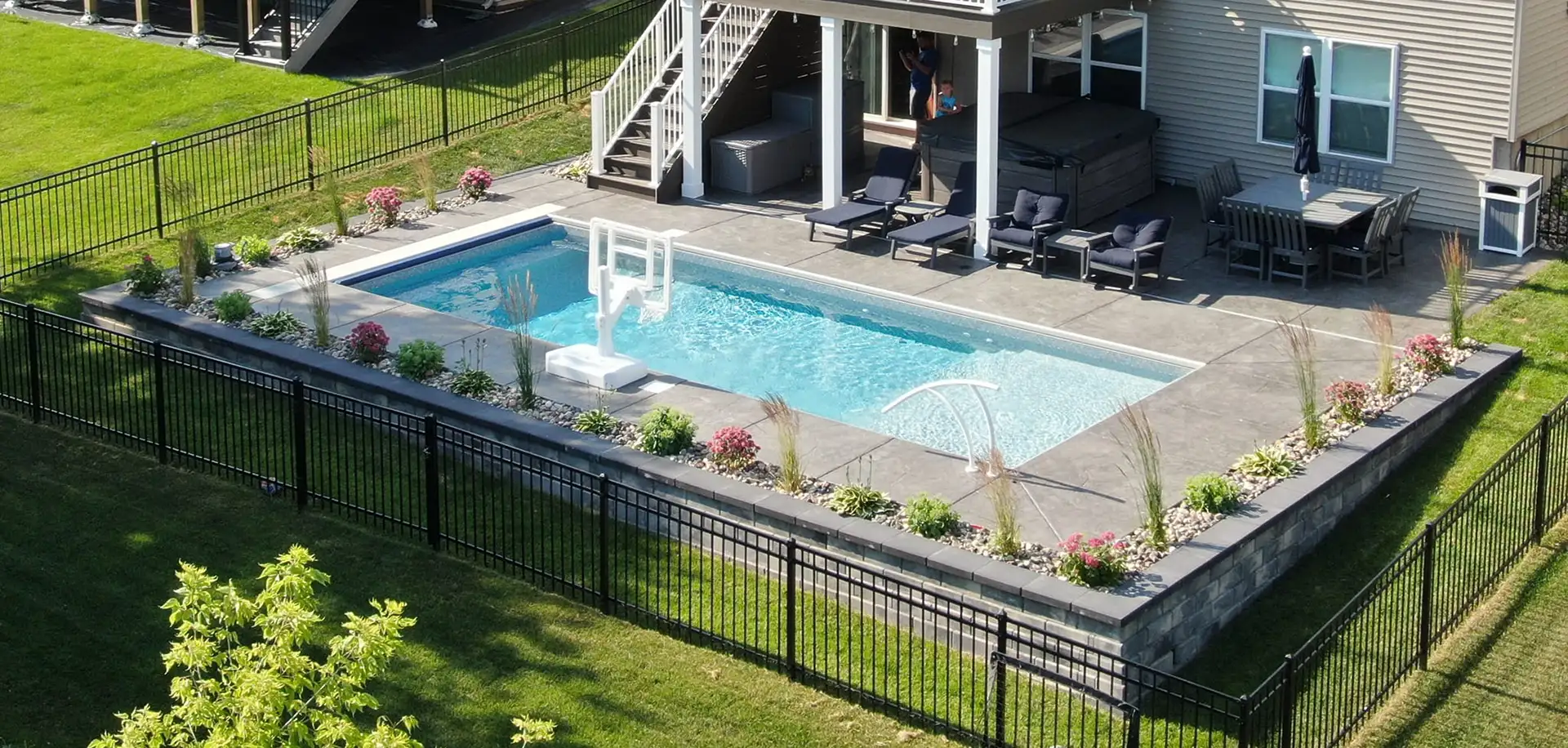
A backyard pool is one of the best parts of summer in Minnesota. It’s where families gather, kids burn off energy, and friends relax on warm evenings. But along with the fun comes an important responsibility: keeping the pool area safe.
Simple safety steps can dramatically reduce the risk of accidents while helping everyone enjoy the water with confidence. From fencing and pool covers to proper water chemistry and equipment, the right approach creates a safer environment for family, guests, and pets.
Below is a practical guide to the most important pool safety measures every homeowner should know.
Secure the Pool Area with Proper Fencing
One of the most effective ways to prevent accidents is by limiting unsupervised access to the pool. A well-designed fence acts as the first line of protection, especially for young children and pets.
When choosing pool fencing, consider these popular options:
- Mesh safety fences – A removable and family-friendly option that creates a strong barrier while remaining flexible for seasonal use.
- Glass panel fences – Provide a modern look and clear visibility so swimmers can be easily monitored.
- Aluminum or steel fencing – Durable and long-lasting, offering a permanent safety solution.
For maximum protection, your pool fence should include:
- A self-closing gate
- A self-latching lock
- A minimum height that meets local safety codes
Professional installation is critical to ensure the barrier works as intended and complies with local regulations.
Use Pool Covers for Added Protection
A quality pool cover provides more than convenience. It adds another layer of safety when the pool isn’t in use.
Safety covers help by:
- Preventing accidental falls into the water
- Supporting the weight of a person or pet in many cases
- Keeping debris out of the pool
- Reducing water evaporation and maintenance time
Common types of pool covers include:
- Manual covers – Cost-effective but require more effort to open and close
- Semi-automatic covers – Offer improved convenience
- Automatic covers – Operate with the push of a button for quick protection
Winter covers also help protect your pool during the off-season while acting as a protective barrier over the water.
Important Safety Features for Families with Children
If children use your pool regularly, extra safety measures are especially important.
Helpful features include:
- Pool alarms that alert you when someone enters the water
- Gate or door alarms for homes with direct pool access
- Locked safety gates that prevent unsupervised entry
- Clearly visible depth markers to discourage diving in shallow areas
It’s also wise to keep essential rescue equipment nearby:
- Life rings or flotation devices
- A reaching pole
- A stocked first aid kit
These tools allow for a quick response if an emergency occurs.
Keep Pool Water Chemically Balanced
Clean, balanced pool water is essential for both comfort and safety. Poor chemical balance can cause skin irritation, eye discomfort, and the growth of harmful bacteria.
Homeowners should routinely monitor:
- pH levels
- Chlorine or sanitizer levels
- Total alkalinity
- Calcium hardness
Helpful tips include:
- Test water regularly with a reliable pool test kit
- Consider automatic chemical feeders for consistent chlorine levels
- Store pool chemicals safely away from children and pets
- Keep pumps and filtration systems running properly for good circulation
Proper water chemistry keeps swimmers safe while protecting the pool’s equipment and surfaces.
Maintain a Safe Pool Deck and Surrounding Area
Safety extends beyond the water itself. The pool deck and patio should also be designed with accident prevention in mind.
Consider these improvements:
- Install slip-resistant surfaces such as textured concrete or pavers
- Keep walkways free of clutter and loose equipment
- Ensure proper lighting around steps, edges, and walkways
- Regularly inspect for loose boards, cracked concrete, or uneven surfaces
A well-maintained deck reduces slips and falls, especially during busy summer gatherings.
Follow Local Pool Safety Regulations
Pool safety rules can vary depending on where you live, and many communities have specific requirements for residential pools.
Typical regulations may include:
- Minimum fence height requirements
- Self-closing gates and safety latches
- Required pool alarms or safety covers
- Periodic inspections or registrations
Staying informed about local guidelines helps you remain compliant while creating a safer backyard environment.
Professional Pool Equipment and Safety Systems
Modern pool technology can improve both safety and efficiency.
Helpful equipment upgrades may include:
- Pool alarms that detect unexpected water entry
- Anti-entrapment devices that prevent suction hazards
- High-efficiency pumps and filters that maintain water quality
- Automated monitoring systems for equipment performance
Routine inspections and maintenance ensure everything continues working properly.
Keep Your Pool Safe with Royal Pool & Spa
Pool safety doesn’t have to be complicated. With the right equipment, regular maintenance, and expert guidance, your backyard pool can remain a safe and relaxing place for family and friends.
At Royal Pool & Spa, we help homeowners throughout Minneapolis, St. Paul, and surrounding communities maintain safe, beautiful pools. Our team can assist with:
If you want peace of mind that your pool area is safe and properly maintained, our team is ready to help.
Contact Royal Pool & Spa today.